The Big Picture Blog
What happens when we slow down and really look at the Bible?
As part of The Big Picture, we’re spending the next six months exploring highlights from Genesis to Revelation—reading the Bible with both head and heart and discovering how its stories, people, questions, and themes fit together.
The Big Picture Blog is a place to keep the conversation going beyond Sunday morning. Each week, we’ll take a deeper look at the Scripture and ideas explored in worship, along with reflections and responses from members of our church community.
You’ll find sermon reflections, questions, different perspectives, and personal responses to Scripture—because engaging the Bible together means there’s room for curiosity, conversation, questions, and even disagreement.
Read along. Think deeply. Share your perspective. See the Big Picture.
New posts are added weekly throughout The Big Picture series. Check back each week for the latest reflections, and consider contributing your own response to the conversation.
________________________________________________________________________________________________________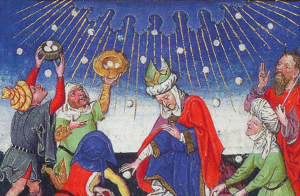
MANNA FROM HEAVEN (October 4, 20226)
Rev. Narae Kim
Practicing Faith in the Wilderness
I am part of a Clergy Mom’s group in our conference. We meet once a month on Zoom to check in, share our lives, and support one another. During one of our gatherings, a colleague shared a poem by Stephanie Kaza called “Letting Go,” included in Womanprayers: Prayers by Women from Throughout History and Around the World.
As I listened to the poem, I immediately thought about the Israelites in the wilderness — perhaps because I was preparing my sermon for World Communion Sunday, “Manna: What Is It?” The poem became a source of inspiration for my sermon and reminded me that faith is not something we claim once; it is something we practice. Our faith and courage need to be practiced, especially when we are walking in the dark and cannot see the whole path ahead.
Letting Go
Let go of the place that holds,
Let go of the place that flinches,
Let go of the place that controls,
Let go of the place that fears.
Just let the ground support me.
Listen, the wind is breathing in the trees.
Sensing the edge of soft and hard,
I follow the unseen path.
Walking in the dark night,
I practice faith,
Building confidence in the unknown.
Walking in the dark night,
I practice courage,
accepting the vastness
of what I cannot see.
—Stephanie Kaza, “Letting Go”
“I practice faith.” “I practice courage.”
I love those words because the poet doesn't say she has everything figured out. She is still walking in the dark. She cannot see the whole path, and yet she keeps practicing faith and courage.
That is what the Israelites were learning in the wilderness. They had experienced God's power and provision, but they still struggled with fear and uncertainty. Each day, God gave them manna—enough for that day—and invited them to trust God for tomorrow.
And that is what we are invited to learn, too. We may not know what tomorrow will bring or understand the whole journey. But we can receive God's grace today, take the next faithful step, and trust that God will meet us again tomorrow.
________________________________________________________________________________________________________
WRESTLING WITH GOD (September 27, 2026)
Rev. Ron Foster
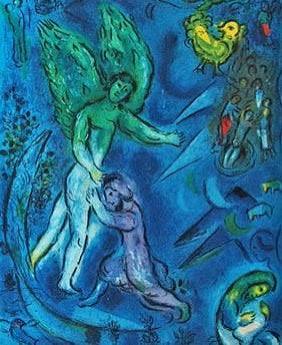
The story of Jacob wrestling with an angel/God in the desert as he prepares to meet his brother, is another turning point in Jacob's story and the story of Israel's relationship with God. Having sent his family ahead of him across the Jabbok River, Jacob finds himself alone when suddenly a stranger comes upon him and engages him in a wrestling match in the middle of the night. Is it Esau, his brother, come to settle things once and for all? Is it an opportunistic stranger who finds an isolated Jacob a sitting prey? Or is it God? The text and traditions around its interpretation seem to all point in this last direction.
When the match continues to almost daybreak, his worthy opponent puts Jacob's thigh out of joint to end things, but not before Jacob demands a name and a blessing from this mysterious stranger. Refusing to give up his name (echoes of Moses and the burning bush), the stranger/God does offer a blessing in the form or a name change for Jacob. No longer shall he be known as "the heel grabber" (Jacob) but from now on, he shall be called Israel, "one who strives with God." This becomes one more transformative moment in the ongoing evolution/maturing of Jacob who is slowly claiming his place in the covenant history of God and his people. He also becomes the model for a faith that is willing to "go to the mat" with God as it asks questions and wrestles through this intimate and challenging relationship.

RESPONSES
The Persistent, Wrestling Widow
As you were preaching on Jacob wrestling at the Jabbok, it made me think of a really neat New Testament connection.
In Luke 18:1–8 Jesus encourages us to pray continually and never give up. When the judge complains that the widow is going to "wear me out", the Greek word used is an ancient combat term that means "to "give a black eye."
I love that connection: Jesus subtly frames persistent, relentless prayer as a form of physical wrestling, badgering heaven until a blessing is granted. It felt like such a direct echo of Jacob holding on through the night and refusing to let go until he received a blessing. Anyway, I thought you might find that link as interesting as I did after today's sermon!
--Ted Bloemendaal
________________________________________________________________________________________________________
COVENANT (September 20, 2026)
Rev. Byron Brought
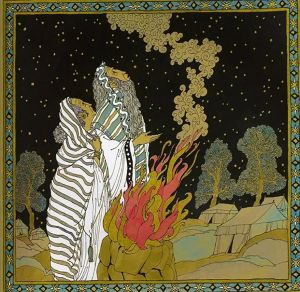
One of the most significant passages in Scripture, Genesis 12, describes a covenant that God made with Abraham and his descendants, not just his biological descendants but also “those who share the faith of Abraham” (Romans 4:16). Through Abraham God brings a blessing to all the families of the earth, to all who are of the dust of the earth and to the dust they shall return. It is the blessing of grace, of a new beginning in covenantal relationship with God, of life. Like Abraham we are called to go “to a land that God will show us”, that is we are called to walk by faith and faithfulness to serve and obey the God who is leading us to that city that has foundations, whose builder and maker is God (Hebrews 11:10). May it be said of us what was said of old, the LORD said go, and Abraham went.
_______________________________________________________________________________________________________________
BEGINNINGS (September 13, 2026)
Rev. Ron Foster
In my sermon this past Sunday on the two creation stories (yes TWO!) found in the opening chapters of Genesis, I suggested that right from the outset of the Bible, we are encouraged by the biblical writers to engage our hearts and our heads, to read the texts with both childlike wonder and critical eyes. In Genesis 1, we have a beautiful, epic poem with a particular cadence that draws attention to the orderliness and cosmic nature of God's creation. Here's a taste:
In the beginning when God created the heavens and the earth, the earth was a formless void and darkness covered the face of the deep, while a wind from God swept over the face of the waters. Then God said, “Let there be light”; and there was light. And God saw that the light was good; and God separated the light from the darkness. God called the light Day, and the darkness he called Night. And there was evening and there was morning, the first day. (Gen.1:1-5)
If you read the rest of the chapter you'll really appreciate the rhythm and repetition.
Compare that to the campfire story of Genesis 2:4b-25 that is much more folksy and intimate. It portrays God playing around in the dirt and creating the Adam (the "earth creature") from the Adamah (the "earth") as he breathes life into this inanimate gingerbread man. He makes man first (not as the culmination of creation on the 6th day like chapter 1 - just one of the many details that are different), sets him in a beautiful garden, creates all kinds of animals for him to name and then finally takes a rib while he is sleeping and creates the woman to be his helpmate (in Genesis 1 they are created together at the same time).
You see, Genesis was never intended to be a science textbook that tells us about the how of creation but rather a rich reservoir of sacred stories that reveal the why of creation: We were created good by a God who loves us and longs for us to live in relationship with God and with each other.
RESPONSES
Two Stories? Eye-Opening!
I want to thank you for the eye-opening comment about how one really couldn’t take the Bible literally when you compare the first two chapters of Genesis because they each paint totally different versions of Creation. I had never thought about it that way, and you’ve given me a whole new framework for not stressing about what can seem like inconsistencies throughout the Bible. Thank you for that!!
What jumped to my mind as I thought about your depiction of the poetic overview of Creation in Genesis 1 contrasted with (love this) the campfire story of Genesis 2 was how one hit on the Big Picture and the other shared the nitty gritty details. As a past Myers-Briggs devotee, the “N” in me (Big Picture) realized that’s why I related to Genesis 1 more, as I often push the details aside in favor of the larger story arc. But the fact that God saw fit to give us both accounts just made me smile, because of course we need both the nitty gritty details AND the Big Picture overview!
I’m looking forward to the journey ahead.
-- Tina Robinson
Isolation Is the First "Not Good"
Throughout Genesis 1, God surveys His unfolding universe through an unbroken, rhythmic refrain: “And God saw that it was good.” It establishes an architecture of cosmic perfection. But the moment we hit Genesis 2:18, the record abruptly skips: "Then the LORD God said, 'It is not good (lo tov) that the man should be alone..." This is a profound theological turning point for several reasons:
Before a single moral choice or sin enters the world, God identifies the very first existential deficiency in creation: isolation. Adam is surrounded by a thriving garden and animals, yet he is entirely alone and fundamentally incomplete. He cannot bridge this gap himself; he needs a rescuer...
In short, the very first "not good" in the Bible establishes that human isolation is a crisis requiring a divine rescue operation—foreshadowing humanity's ultimate spiritual need for Christ. After seven straight repetitions of "it is good" in Genesis 1, 2:18 drops the first ever lo tov ("not good")—specifically regarding human isolation. The first flaw in the universe isn't a moral failure (sin), but an existential one: man alone, unable to fix his own isolation, needing a divine rescuer (ezer). It feels like such a brilliant blueprint for how Christ steps into our ultimate spiritual isolation to rescue us.
--Ted Bloemendaal
God Really Must Have Liked Us
It’s overwhelming that our Creator could bestow all of these beautiful resources on us. That young man was right: “God must have really liked us!”
I can only imagine the wonderment of exploring and experiencing all of these gifts. How did Adam and Eve make a life, make order of their days, establish eating rituals. Were they ever afraid? How did they get to know one another, establish roles for each? How did they fill their days? How did they pray and interact with God? How did they interpret God’s instructions? Not so well with the tree! So much more to think about!
-- Debbie Murphy
Need Them Both, Prefer the First
I really like having the two versions of "In the beginning . . ." and "A long time ago in a galaxy far, far away. . ." No, wait. That's not quite right.
Chapter One does start: "In the beginning, God created the heavens and the earth..."
Chapter Two (verse 4) starts:"This is the history of the heavens and the earth, when they were created in the day that the Lord God made the earth and the heavens.'
As you described it, one is very linear, straightforward and to the point. The other is more flowery with meanings and innuendo.
I think we need them both. I do prefer the first version better. I like the details, the plan, the preciseness of it all to end in six days and rest on the seventh. It is very clean and easy to follow.
However, the second version is much more human. The flora and fauna are described. The lands are laid out. Rules are even beginning to be established. There is a plot. Then characters are added and we are off to the races.
--Chip Graber
Hard to Fathom the Grandiosity
I am most struck by the awesomeness of God beyond, above, before, greater than even light and darkness. It is difficult to put into words the magnitude of the Divine force that can create and separate light and dark, and THEN create day and night, and THEN create the sun, moon, stars and planets! That is a mighty big and powerful God.
It is hard to fathom the grandiosity, but I guess that is the mystery.
--Kris Zyla
________________________________________________________________________________________________________
Missed a sermon in the Big Picture series? Catch up here.